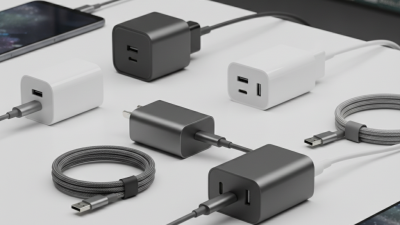
Choosing the right Usb C Charger is no longer a simple matter of picking the highest wattage. Global buyers face different devices, travel habits, plug systems, and safety expectations. A compact phone charger may suit daily commuting, while a 140W desktop model can support laptops, tablets, and accessories. The best choice depends on actual charging needs.
This guide introduces ten practical USB-C charger types for international purchasing. It covers single-port models, multi-port units, GaN chargers, laptop power adapters, car chargers, travel chargers, and compact emergency options. Each type has a specific use case. A four-port charger looks convenient, but its total output may drop when several devices connect. That detail is easy to miss.
Reliable selection requires more than attractive packaging. Buyers should check USB Power Delivery support, PPS compatibility, maximum output, cable ratings, thermal protection, and regional plug requirements. Voltage compatibility matters too. A charger designed for broad input ranges may travel well, but the wall plug still needs proper local support. Certified products from traceable manufacturers generally offer stronger documentation and more dependable quality control.
Real-world testing can reveal weaknesses. A charger may become warm beside a crowded hotel bed. A supposedly small model may block the neighboring socket. These issues are not dramatic, yet they affect daily use. Some buying advice also sounds too certain. Device behavior, cable quality, and regional standards can change the result. This overview aims to provide useful guidance while leaving room for careful checking before purchase.
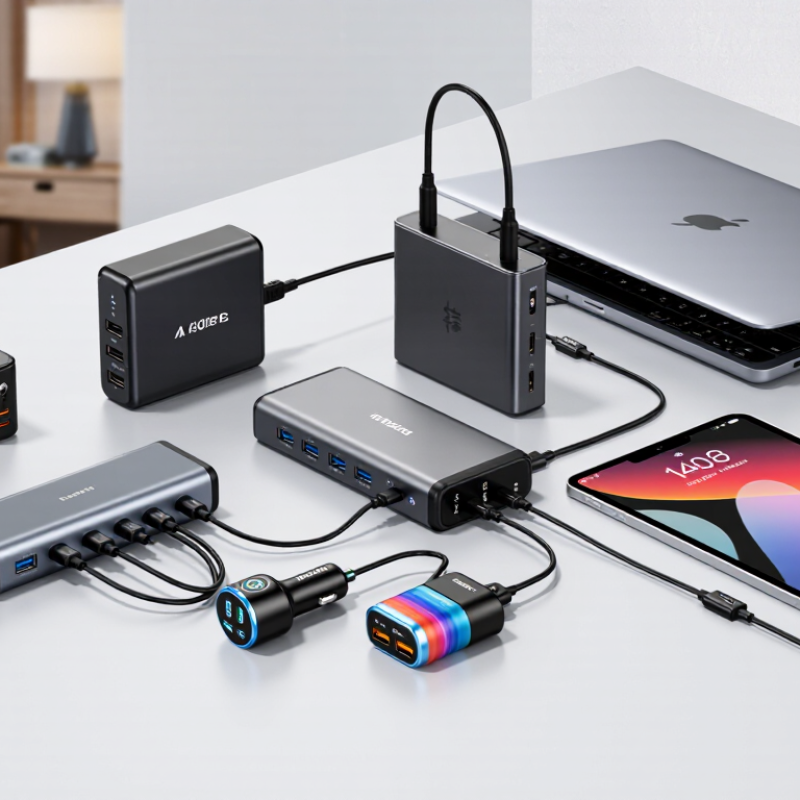
USB-C charging begins with the connector, not the wattage label. A reliable charger should support USB Power Delivery, clear voltage profiles, and appropriate thermal protection. The USB Implementers Forum defines USB PD specifications up to 240 watts, but devices rarely need the maximum. A compact phone charger may use 20–30 watts, while many laptops require 65 watts or more. Bigger is not always better.
The ten practical types include single-port wall chargers, dual-port models, multi-port desktop chargers, GaN chargers, travel chargers, car chargers, laptop chargers, high-wattage workstation units, PPS chargers, and rugged industrial chargers.
PPS can adjust voltage in smaller steps, which may reduce heat during compatible charging. The European Commission’s common-charger rules require USB-C for many portable devices sold in the region from December 2024. Laptop requirements follow in April 2026.
Global buyers should check input voltage, plug configuration, USB PD profiles, PPS support, cable rating, and safety documentation.
The International Energy Agency reports that standby power remains a meaningful efficiency issue across connected devices, so idle consumption deserves attention.
Market reports from Fortune Business Insights also project strong growth in USB charger demand, driven by device consolidation and faster charging needs. Yet forecasts are not guarantees.
I have seen buyers choose by port count alone. That decision can fail. A four-port unit may divide power sharply under load.
Regional testing, realistic device combinations, and clear labeling matter more than impressive packaging.
One detail is easy to miss: cables can limit performance. A high-power charger needs a suitably rated cable.
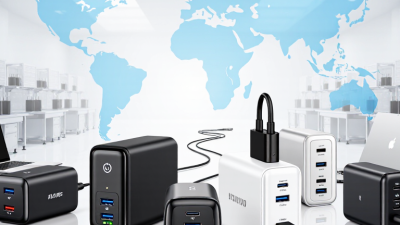
Top 10 USB C Charger Types for Global Buyers
The Top 10 USB-C Charger Types by Design and Function
USB-C chargers differ in shape, port layout, output control, and daily use. A single-port wall charger suits phones and compact tablets. A multi-port desktop charger supports several devices beside a monitor. A folding travel charger saves space in a crowded carry-on. It is small.
A GaN charger uses compact power components and often delivers high output with less bulk. A cable-integrated charger reduces loose accessories, although a damaged cable can limit its service life. A car charger fits a vehicle socket and helps during long road trips. A power-bank charger combines stored energy with USB-C output for airports or outdoor work. A charging station offers several ports for shared desks and family spaces. Some models include wireless charging, but USB-C usually remains faster and easier to verify.
For laptops, a programmable USB-C power charger can adjust voltage and current through modern charging protocols. A rugged charger adds reinforced housing for workshops, warehouses, or frequent travel. Buyers should check wattage, port-sharing behavior, cable rating, plug design, and local electrical certification. A 100-watt label does not mean every port delivers 100 watts. Test heat, charging stability, and fit before regular use. No design is perfect. I have seen compact models run warm under sustained loads, while larger units offered better thermal control. That trade-off deserves honest attention.
Power output, charging standards, and device compatibility should guide every USB C charger purchase. A basic 5W or 10W charger suits earbuds, watches, and older phones. Compact 18W to 30W models work well for modern phones. Tablets often need 30W to 45W, while lightweight laptops usually require 45W to 65W. High-power chargers from 100W to 140W support demanding laptops, but only with compatible cables. Cable limits matter.
USB Power Delivery chargers provide broad compatibility across phones, tablets, handheld consoles, and computers. Programmable Power Supply models can adjust voltage more smoothly, which may reduce heat during supported fast charging.
Multi-port chargers offer two, three, or more outputs, but total power is often shared. GaN chargers are smaller and commonly support higher output, although design quality still matters. Car chargers add travel convenience, while desktop chargers suit offices and shared workspaces. Portable battery chargers with USB C input and output are useful during flights or remote work.
Check the label. Confirm voltage, wattage, port allocation, and included cable specifications. A 65W charger may deliver only 45W when another device is connected. I once assumed every USB C cable supported laptop charging, but that was incorrect. Look for clearly stated current ratings and recognized safety markings for the destination market. Compatibility lists are helpful, yet real device testing remains important. Some devices charge slowly despite matching connectors because their charging protocols differ. Small details matter.
Choosing among the top 10 USB-C charger types starts with the wall socket, not the charging port. Type A and B plugs suit North America and parts of Japan. Type C, E, and F plugs are common across Europe. The United Kingdom, Ireland, and several nearby markets use Type G. Australia, New Zealand, and China mainly use Type I. Japan also uses Type J, while Switzerland uses Type K. South Africa often requires Type M. Some labels are confusing.
Voltage matters more than plug shape. Many modern USB-C chargers accept 100–240V and 50–60Hz, but buyers must confirm the input range printed on the charger. A plug adapter changes the shape only. It does not convert voltage. A device designed only for 120V may need a proper voltage converter abroad. That detail is easy to miss.
For travel, an interchangeable-plug charger can reduce luggage, while a compact single-region model may feel more stable in loose sockets. A universal travel charger is useful for multi-country trips, but its sliding parts deserve careful inspection. I have learned that high wattage is not always better. A small phone may need little power, while a laptop needs suitable wattage and cable support. Check heat, socket fit, and certification markings before packing. I still make one mistake: trusting a familiar plug without checking the destination voltage. Verify both.
| No. | USB-C Charger Type | Typical Output Profile | Common Regional Plug Types | Typical Mains Voltage and Frequency | Best Travel Use | Important Buying Considerations |
|---|---|---|---|---|---|---|
| 1 | Single-Port USB-C Phone Charger | 18–30 W; USB Power Delivery (PD) commonly supports 5 V, 9 V, and sometimes 12 V profiles. | Type A/B, C, E/F, G, I, or a detachable regional plug head. | Choose a 100–240 V AC, 50/60 Hz input model for international use. Local systems commonly range from 100 V to 240 V. | Lightweight charging for smartphones, earbuds, e-readers, and small USB-C devices. | Confirm USB-C PD support, plug compatibility, and whether a cable is included. |
| 2 | Compact Dual-Port USB-C Charger | 30–45 W total; power is shared when two devices charge simultaneously. | Type A/B in North America and parts of East Asia; Type C/E/F in much of Europe; Type G in the United Kingdom and nearby markets. | 100–240 V AC, 50/60 Hz input is preferred for global travel. | One phone plus one secondary device, such as a tablet, watch, or wireless accessory. | Check the output allocation for two-port operation rather than relying only on the headline wattage. |
| 3 | GaN Fast Charger | 30–100 W; gallium nitride designs can provide high power in a relatively small enclosure. | Usually supplied with a fixed Type A, C, G, or interchangeable plug system. | Look for 100–240 V AC, 50/60 Hz input. The charger does not convert local mains voltage for other appliances. | Frequent international travel where luggage space and weight are important. | Review heat management, continuous output, port sharing, and safety certifications for the destination market. |
| 4 | 65 W Laptop USB-C Charger | Up to 65 W USB PD, often using a 20 V profile at up to approximately 3.25 A. | Type A/B, C/E/F, G, I, or a universal plug adapter with a compatible socket. | 100–240 V AC, 50/60 Hz input covers most international destinations. | Ultrabooks, business laptops, tablets, phones, and other medium-power devices. | Verify the laptop's required wattage and use a USB-C cable rated for the intended power level. |
| 5 | 100 W High-Power USB-C Charger | Up to 100 W USB PD; a 5 A electronically marked cable is generally required for 100 W operation. | Regional versions may use Type A/B, C/E/F, G, I, or interchangeable plug heads. | Use a 100–240 V AC, 50/60 Hz input model for worldwide compatibility. | Performance laptops, portable monitors, tablets, and demanding work equipment. | Check cable rating, thermal performance, and how much power remains on additional ports. |
| 6 | 140 W USB-C PD 3.1 Charger | Up to 140 W using USB PD Extended Power Range (EPR); compatible devices and cables are required. | Type A/B, C/E/F, G, I, or a modular international plug system. | Select 100–240 V AC, 50/60 Hz input for travel between different electrical systems. | High-performance laptops and mobile workstations that accept USB PD EPR. | Requires a suitable 5 A EPR cable; devices that do not support EPR will draw only their supported power. |
| 7 | Multi-Port Family or Workstation Charger | 100–240 W total across multiple USB-C and sometimes USB-A ports. | Often available with Type A/B, C/E/F, G, or interchangeable regional plugs. | 100–240 V AC, 50/60 Hz input is recommended; output can decrease when several ports are active. | Shared hotel rooms, remote offices, families, and multi-device workstations. | Study the port-by-port power table, maximum AC input rating, ventilation, and cable organization. |
| 8 | USB-C Travel Charger with Interchangeable Plugs | Typically 30–100 W, with plug heads that can be changed for different regions. | Common sets include Type A, Type C, Type G, and Type I; coverage varies by model. | The charger should state 100–240 V AC, 50/60 Hz input. Plug shape and voltage are separate specifications. | Multi-country itineraries and travelers who want one compact charging unit. | Confirm included plug heads, mechanical locking, grounding arrangements, and destination coverage. |
| 9 | USB-C Charger with Built-In Travel Adapter | Usually 30–65 W USB-C output plus an integrated adapter socket for another device. | Often supports several plug systems, but the exact combination depends on the adapter design. | USB-C charging input should support 100–240 V AC, 50/60 Hz; the adapter socket may not convert voltage. | Travelers carrying a laptop charger, camera charger, shaver, or other non-USB device. | The pass-through socket is not automatically a voltage converter; check the connected appliance's voltage rating. |
| 10 | USB-C Car Charger | 20–100 W; output depends on the vehicle's 12 V or 24 V electrical system and the charger's design. | No AC wall plug; it connects to a vehicle accessory socket or a dedicated USB-C port. | Designed for nominal 12 V passenger vehicles or 24 V commercial vehicles; it is not a direct AC mains charger. | Road trips, rental cars, taxis, vans, and mobile work setups. | Check 12 V/24 V compatibility, fuse limits, USB PD profiles, heat protection, and socket fit. |
Top 10 USB C Charger Types for Global Buyers
Safety starts with the charger’s electrical design, not its port shape. Common types include wall, travel, desktop, car, multiport, GaN, power-bank, laptop, modular, and wireless-hybrid chargers. USB Power Delivery 3.1 supports outputs up to 240 watts, according to the USB Implementers Forum specification. Buyers should match voltage, current, and charging protocol carefully. A higher wattage rating does not automatically mean faster or safer charging.
Look for recognized conformity evidence. IEC 62368-1 addresses electrical energy hazards, fire risks, and enclosure safety. In the United States, an NRTL listing offers stronger evidence than a decorative mark alone. CE supports European market conformity, but it is not a universal quality certificate. The European Union’s common-charger rules also make USB-C important for many devices from December 2024. Laptop requirements follow in April 2026. Requirements still differ across regions. Check the destination market.
A professional inspection should examine insulation, thermal protection, overload control, leakage current, and cable ratings. I have seen compact chargers become uncomfortably hot inside crowded travel bags. That warning should not be ignored. The 2024 Global E-waste Monitor reported 62 million tonnes of e-waste in 2022, with only 22.3% formally recycled. Durable housings and replaceable cables may reduce waste, although this assumption deserves testing. Buyers should request laboratory reports, model-specific certificates, and traceable test numbers before ordering large quantities.