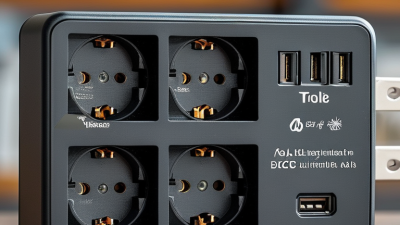
Choosing a USB Plug Socket manufacturer is not just a matter of comparing prices or polished product photos. Buyers need to examine charging standards, safety testing, materials, production capacity, and after-sales support. A socket that looks sturdy on a showroom wall may behave differently after months of daily use. Small details matter: port spacing, heat management, terminal quality, and how firmly a plug fits. Details matter.
USB-IF president Jeff Ravencraft has publicly championed consistent USB standards and compatibility. A fair paraphrase of that standards-focused message is: “Reliable USB products depend on consistent specifications and compatibility.” This perspective is useful when comparing manufacturers, though it is not a verbatim quotation. The list of China’s top 10 manufacturers should therefore be read as a practical starting point, not a universal ranking. Company strengths can vary by product line, order size, customization needs, and verification practices. Ask for current test reports, inspect samples, and confirm that specifications match the intended installation. A promising factory can still have gaps in documentation or communication. That deserves scrutiny. This guide introduces manufacturers through their product focus, capabilities, and buyer-relevant considerations, helping readers ask sharper questions before requesting quotes. No single supplier fits every project. A careful comparison can reveal the right match.
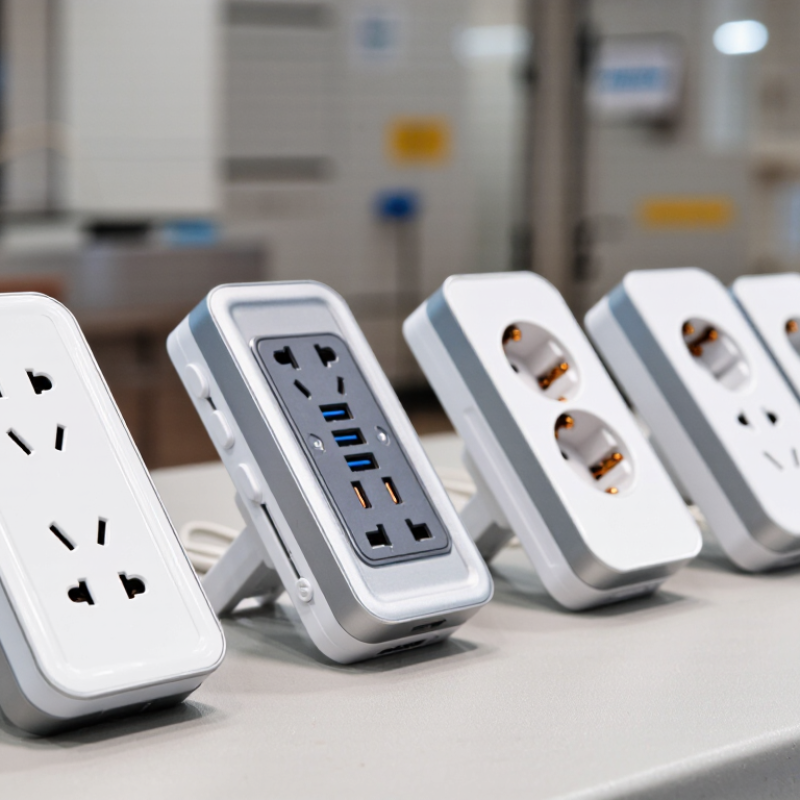
USB-C Power Delivery 3.1 raises the possible power ceiling for compatible devices. The USB Implementers Forum’s Revision 3.1 technical specification defines Extended Power Range operation up to 240 W, using as much as 48 V and 5 A. That is a substantial step beyond earlier USB-C power levels. The ceiling is real.
For USB plug socket manufacturers in China, the figure is a design target, not a promise made by the socket alone. A complete installation needs a suitably rated power supply, controller, cable, and connector, with thermal performance checked under sustained load. At 48 V and 5 A, even small contact resistance can create heat. Testing matters.
For buyers, ask for the rated output per port, not just the total wattage printed on a product sheet. Confirm whether the port supports USB PD 3.1 Extended Power Range and whether the supplied cable is rated for the intended current. USB-IF’s USB Power Delivery Specification Revision 3.1 is the primary technical reference for these limits. Real-world output may be lower when multiple ports operate together, and product documentation should explain that clearly. It is easy to overlook.
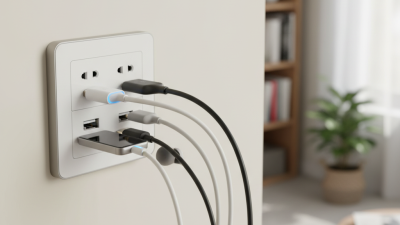
For China’s socket manufacturers, GB/T 2099.1-2021 is a practical benchmark, not just a label. The national standard covers household and similar plugs and socket-outlets, including marking, dimensions, construction, and safety tests. Its clauses 8, 9, and 19 address marking, dimensional checks, and temperature rise. A 10 A, 250 V rating therefore needs to match the tested product, not merely appear on its packaging. That distinction is easy to overlook.
At 250 V, a 10 A socket corresponds to a nominal load of 2,500 W. This calculation is useful, but it is not a blanket promise that every appliance can run safely from one outlet. Wiring, installation conditions, and continuous loading still matter. The standard’s test framework, aligned with the IEC 60884-1 family, gives buyers a basis for checking product claims; it does not replace careful installation or product-specific verification. Look for legible rated values and consistent pin dimensions. Small details count.
A factory audit should also examine test records for temperature rise and normal operation, rather than relying on a catalogue specification. I would still ask how samples were selected and whether the tested configuration matches the shipped socket. Paperwork can look tidy. Real consistency takes more work. Sources: GB/T 2099.1-2021; IEC 60884-1, Plugs and socket-outlets for household and similar purposes.
A USB plug socket is more than a convenient charging point. Its safety depends on how mains voltage, low-voltage USB output, heat, and user-accessible parts are separated. GB 4943.1-2022 sets safety requirements for audio, video, and information technology equipment in China. IEC 62368-1 uses a hazard-based approach, assessing energy sources and the safeguards that protect users.
For manufacturers, the standards guide design reviews and testing, but their scopes and adopted editions may differ. Check which requirements apply to the exact product and market. Inspect insulation barriers, clearances, enclosure strength, and temperature rise during rated-load tests. A warm adapter is not automatically unsafe, but unexpected heating deserves investigation. So does a loose socket.
Useful evidence includes test reports linked to the precise model, documented component changes, and checks under normal and abnormal operating conditions. Paperwork can lag. That happens. A certificate alone cannot confirm that every production unit matches the tested sample. Nor can product testing guarantee safe installation in every home. Qualified assessment, careful production control, and clear records make compliance more dependable.
Among China’s top 10 USB plug socket manufacturers, a polished catalog is only a starting point. Compare documented capabilities, not sales claims. Ask whether certificates cover the exact socket models, USB modules, and target markets you plan to buy. Check issuing bodies, report dates, and model numbers. A certificate for one product may not cover a similar-looking variant. Small detail, big difference.
Testing tells you how consistently a factory checks its products. Request sample inspection records and ask about tests for temperature rise, insulation, mechanical strength, and USB charging output. Confirm what happens when a sample fails. Is the issue traced to a component batch, or merely retested? That answer matters. A short video of a test bench helps, but it cannot replace clear records or independent verification where appropriate.
Capacity should mean repeatable output, not just a large workshop. Ask for monthly production figures, current lead times, and how the supplier handles busy seasons. If possible, compare these details with a sample order before discussing a large commitment. Product range matters too: a supplier offering different outlet layouts, USB-A and USB-C options, and mounting styles may simplify sourcing. Yet too many options can complicate quality control. I would not treat range as an automatic advantage; the trade-off deserves a closer look.
Use this evidence-based checklist to compare up to 10 shortlisted manufacturers. It does not rank or identify individual companies; certification scope, test results, production capacity, and available models should be verified directly with each supplier.
| Comparison Dimension | What to Request or Check | How to Compare Suppliers | Why It Matters |
|---|---|---|---|
| 1. CCC applicability | Ask whether the exact finished product and intended market fall within China’s current Compulsory Product Certification (CCC) catalogue. Request the certificate and check its holder, model coverage, validity, and issuing authority where applicable. | Match the certificate scope to the offered USB socket model; do not rely on a certificate for a different product family or component. | CCC obligations depend on product classification and applicable catalogue rules; a supplier’s general claim is not proof of coverage. |
| 2. Electrical safety standards | Request the applicable product-standard list and test reports. IEC 60884-1 covers general requirements for household and similar plugs and socket-outlets; confirm the applicable edition and national requirements for the destination market. | Check that reports identify the same product construction, ratings, and models being quoted, and were issued by a competent laboratory. | A standard’s applicability depends on the product design, certification scheme, and target jurisdiction. |
| 3. USB charging compliance | For USB-A or USB-C outputs, request the charging-interface specification, output ratings, protection details, and relevant safety and performance reports. Ask for USB-IF documentation only if the supplier claims USB-IF compliance or certification. | Compare supported protocols and output behavior against the buyer’s device and market requirements; verify claims against model-specific documents. | A USB connector alone does not establish a particular charging protocol, power level, or certification status. |
| 4. Test-report quality | Request full reports covering applicable checks such as dielectric strength, insulation resistance, temperature rise, endurance, and abnormal operation, plus USB output tests where relevant. | Confirm the report includes the model, sample description, test methods, results, date, and laboratory details. Ask whether design changes have occurred since testing. | A summary sheet or an unrelated sample report may not demonstrate that the quoted product was tested. |
| 5. Production capacity | Request current output capacity for the specific product family, normal monthly availability, lead-time assumptions, shift pattern, and recent on-time delivery data. | Compare capacity with your forecast and peak demand; ask for supporting production records or a facility audit rather than relying only on a stated maximum. | Capacity is product- and schedule-specific, and should be evaluated against actual order requirements. |
| 6. Product range | Request a model matrix covering socket configurations, USB-A and USB-C options, rated input and output, mounting style, colors, and available regional versions. | Compare the documented range with your target-market requirements and confirm which options are standard, configurable, or custom-engineered. | A broad catalogue does not necessarily mean every configuration is currently produced or certified. |
| 7. Quality management | If the supplier claims ISO 9001 certification, request the certificate and verify its scope, site address, certification body, and validity. | Distinguish a valid management-system certificate from product certification; check whether the manufacturing site and relevant activities are covered. | ISO 9001 concerns a quality management system and does not, by itself, certify a specific USB socket’s safety or performance. |
| 8. Component traceability | Ask how the supplier identifies and controls critical components, such as terminals, plastics, USB charging modules, and protective devices, including change-control records. | Review material specifications, incoming inspection records, supplier controls, and the process for notifying buyers of component substitutions. | Undocumented component changes can affect product consistency and may invalidate the relevance of earlier test evidence. |
| 9. Inspection and reliability | Request the inspection plan, sampling approach, defect classifications, final-test records, complaint process, and available reliability data for the offered model. | Compare documented acceptance criteria and record keeping; agree on pre-shipment inspection requirements before placing an order. | Clear inspection criteria make quality expectations measurable across samples and production batches. |
| 10. Export and market documentation | Identify the destination country and request the certificates, declarations, labels, instructions, and technical documents required for that market and product category. | Check model numbers and ratings across documents, product labels, packaging, and quotation. Verify regulatory requirements independently for the destination market. | Requirements differ by jurisdiction; a document suitable for one market may not satisfy another market’s rules. |
Comparison note: Request current, model-specific documents and verify them with the issuing organization or relevant authority where possible. Standards and regulatory requirements can change; confirm the applicable editions and rules for the product and destination market before purchase.
China’s Top 10 USB Plug Socket Manufacturers: A Capability-Based Comparison
Comparing China’s ten leading USB plug socket manufacturers requires more than checking product photos or quoted prices. A useful assessment examines rated output, simultaneous charging performance, thermal control, material consistency, and production testing. Can a socket maintain stable charging when both USB ports are occupied? That detail matters in hotel rooms and busy offices.
MarketsandMarkets estimated the global USB Type-C market at about US$4.1 billion in 2023, with a forecast of US$12 billion by 2028. This is a component-market indicator, not a direct measure of socket demand. Still, it signals why USB-C compatibility and power delivery deserve attention. Compare documented output under load, not just the largest number printed on a product sheet.
Manufacturing capability also shows up in less visible evidence: repeatable contact pressure, secure terminal connections, flame-retardant housing specifications, and traceable batch inspections. Ask for test records and samples from regular production, then check them against the intended installation and local requirements. A polished sample is not the whole story. One limitation remains: factory documents may not reveal performance after years of use, so independent testing is valuable. That comparison is imperfect, but more useful than ranking suppliers by catalog size alone.
A standards-based comparison of maximum power levels—not a ranking of manufacturers or specific products.
Values show maximum power defined for the listed mode: USB 2.0 at 500 mA, USB 3.x at 900 mA, USB-C at 1.5 A or 3 A (5 V), USB Power Delivery 3.0, and USB PD 3.1 Extended Power Range. Actual socket output depends on product design and supported charging protocols.