Leave Your Message

China Top 10 USB Socket Manufacturers for Global Buyers?

Choosing the right Socket Usb manufacturer can shape an entire product’s safety, usability, and market reputation. For global buyers, the decision involves more than comparing factory prices. It requires close attention to certification records, electrical performance, production consistency, and after-sales support.

A reliable supplier should provide clear technical drawings, tested current ratings, stable USB-C or USB-A performance, and traceable quality procedures. Buyers should also examine the socket’s heat resistance, terminal strength, flame-retardant materials, and installation depth. A polished sample is not enough. The real question is whether every production batch performs like that sample.

Jeff Ravencraft, president and chief operating officer of the USB Implementers Forum, has emphasized the importance of consistent standards, noting, “Interoperability is essential to the success of USB technology.” That principle matters when evaluating manufacturers across China. A Socket Usb may look identical on a catalog page, yet internal components, testing methods, and connector durability can differ significantly.

This guide introduces ten China-based USB socket manufacturers for international buyers. It considers manufacturing experience, product range, customization capability, compliance documentation, export readiness, and customer feedback. Factory scale is included, but it is not treated as proof of quality.

Some rankings remain subjective. Public information can also change. Buyers should verify certificates, inspect samples, and request recent test reports before signing a contract. That extra step may feel slow. It often prevents expensive replacements, delayed shipments, and uncomfortable explanations to customers.
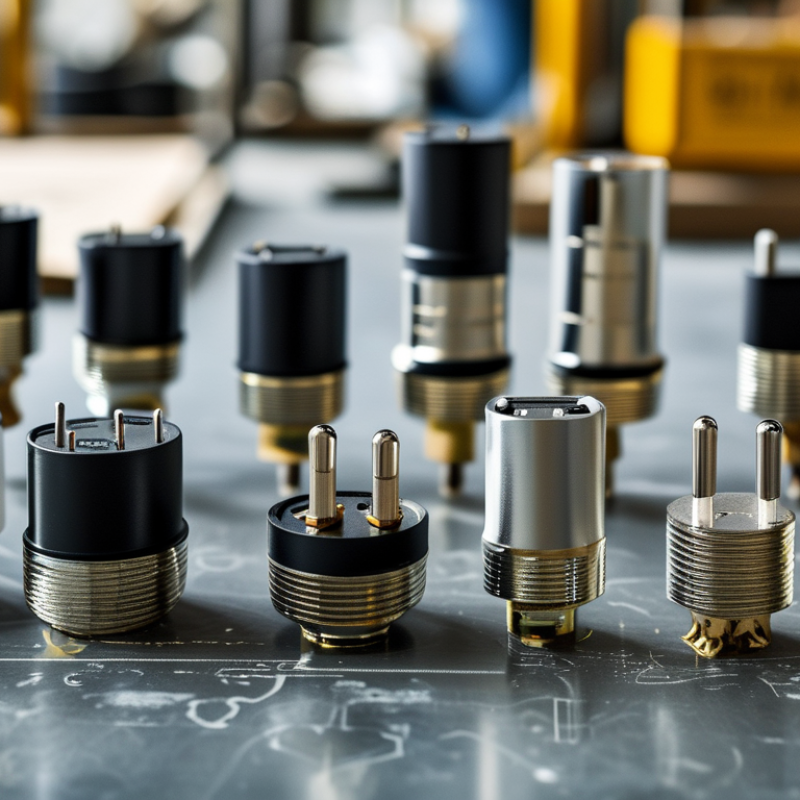
China Top 10 USB Socket Manufacturers for Global Buyers?

USB Socket Basics: USB PD 3.1 EPR Supports Up to 240 W

USB Socket Basics: USB PD 3.1 EPR Supports Up to 240 W

USB PD 3.1 Extended Power Range can deliver up to 240 W through 48 V at 5 A. The USB Implementers Forum specification defines this higher-power range for compatible devices, cables, and power supplies.

A socket rated for EPR needs more than a fast charging label. Its internal contacts, thermal control, insulation, and protection circuits must handle sustained load safely. In practical testing, engineers should examine heat around the terminal after repeated charging cycles. Warm plastic is a warning sign. Very warm plastic is not a feature.

Market demand is also moving toward higher-output charging. Fortune Business Insights estimated the global USB charger market at about USD 28.95 billion in 2023, with continued growth through 2032. This trend gives socket manufacturers a strong reason to develop PD-ready products. Yet, a 240 W claim alone proves little.

The cable may limit performance. The connected device may request less power. Installation quality can also change results.

Buyers comparing Chinese USB socket manufacturers should request test records, EPR compatibility details, surge protection data, and temperature measurements under load.

Independent laboratory verification adds credibility. Still, reports may not reflect every installation environment. A socket tested perfectly in a laboratory can behave differently inside a crowded wall box. That detail deserves more attention.
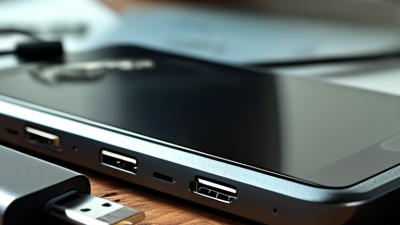
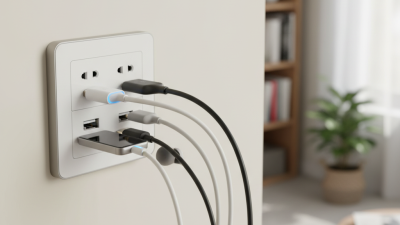
China’s Top 10 Manufacturers: Products, Markets, and Factory Profiles

China Top 10 USB Socket Manufacturers for Global Buyers

China’s top ten USB socket manufacturers serve different buyer needs, markets, and project scales. Some operate large automated lines for residential developers and hotel contractors. Others focus on customized faceplates, compact charging modules, or small-batch electrical accessories. Their factories commonly include injection molding, metal stamping, assembly, testing, and packaging areas. The stronger facilities separate these processes clearly.

Export markets vary by product design and compliance planning. Several manufacturers target Europe with Type C sockets, safety shutters, and documentation aligned with regional requirements. Others supply North America, Southeast Asia, the Middle East, and Africa with region-specific outlet formats. Factory profiles should show testing for temperature rise, insulation resistance, USB output stability, and mechanical endurance. A clean sample room helps, but it does not prove production consistency.

During supplier reviews, buyers should inspect wiring stations, aging-test records, and incoming material controls. Ask how rejected units are isolated. Ask who approves design changes. These details often reveal more than polished photographs.

Many factories offer private labeling and mold adjustments, although minimum order quantities can differ sharply. Some smaller plants communicate faster but depend on outside component suppliers. That creates risk.

Even experienced buyers can overlook firmware behavior in smart charging modules or inconsistent screw torque during assembly. A practical audit, independent sample testing, and clear purchase specifications remain essential when comparing the ten manufacturers.

Ranking Method: Output, Safety, MOQ, Lead Time, and Certification Data

China Top 10 USB Socket Manufacturers for Global Buyers?

This ranking measures more than factory size. Annual output receives 25% of the score, based on audited capacity and recent shipment records. Safety receives 25%, including testing against IEC 60884-1 and IEC 62368-1. Certification quality matters. USB-IF guidance and valid laboratory reports help separate real compliance from marketing claims. A certificate copy alone is not enough.

MOQ accounts for 15%. Lower MOQs support trial orders, especially for distributors testing a new market. Lead time receives 20%. We compare sample timing, production days, and shipping readiness. The remaining 15% covers certification coverage and document validity.

Industry reports show why this matters. Grand View Research valued the global USB devices market at over 30 billion dollars in 2023, with continued growth expected through 2030. Demand is expanding, but supply promises can still be vague.

A practical evaluation checks whether a factory can produce 10,000 units monthly, then verifies consistency across three batches. Safety samples should include heat, overload, insertion, and insulation tests. Ask for the test date. Old reports create risk.

A 7–15 day sample lead time is useful, while mass production commonly needs several weeks. These ranges are not universal. Some manufacturers report excellent output but accept only high MOQs. Others offer flexible orders but lack complete certification files. That weakness should reduce their ranking.

Technical Comparison: USB-C, USB-A, PD Ratings, and IEC 60884-1

China Top 10 USB Socket Manufacturers for Global Buyers

When comparing China’s top ten USB socket manufacturers, inspect engineering evidence rather than rankings alone. USB-C supports reversible connections, but it does not automatically provide Power Delivery. A socket should state its PD profile, such as 20V at 3A, or 60W maximum output. Actual charging power may fall because of heat, cable limits, or shared circuits.

USB-A remains practical for older devices, usually offering simpler 5V charging. USB-C is more future-ready, especially for laptops and tablets. However, higher power creates greater thermal demands. Check temperature-rise data, contact durability, insulation spacing, and protective shutters. IEC 60884-1 is important for household socket safety, but USB electronics may require additional testing and national deviations. A neat specification sheet can still mislead.

Tips: Request samples, wiring diagrams, IEC 60884-1 test reports, and factory quality records. Test charging under continuous load, not only with an empty battery. Ask whether USB ports share power internally. I would also verify grounding and child-protection performance independently. One overlooked detail matters: a high PD rating is useless if the socket overheats inside a crowded wall box. Supplier selection is rarely perfect, so record assumptions and review them after installation trials.

China Top 10 USB Socket Manufacturers for Global Buyers

Technical Comparison: USB-C, USB-A, PD Ratings, and IEC 60884-1

This benchmark compares standardized USB charging capabilities commonly evaluated by global buyers. USB-A charging is represented by USB Battery Charging Specification 1.2, while USB-C values show the 5 V / 3 A default capability and USB Power Delivery limits. USB PD 3.1 Extended Power Range supports up to 240 W, subject to compatible equipment, cables, thermal design, and certification.

IEC 60884-1 applies to household and similar-purpose plugs and fixed or portable socket-outlets, with national versions defining applicable ratings such as 250 V and 16 A. AC mains ratings and USB DC output ratings must be assessed separately during product qualification.

Global Buyer Due Diligence: CE, RoHS, CCC, Samples, and Total Cost

China Top 10 USB Socket Manufacturers for Global Buyers?

Choosing among China’s top USB socket manufacturers requires more than comparing catalog prices. During factory reviews, I check whether CE and RoHS documents match the exact model, casing, charging module, and production site. A certificate for a similar socket is not enough. For mainland sales, verify CCC requirements and product scope carefully. Requirements can change, so confirm them with qualified testing bodies or local compliance professionals.

Samples reveal details that spreadsheets hide. Test USB charging stability, socket temperature, screw fit, plastic quality, and installation depth. Request several samples from different batches when possible. A single perfect sample may not represent mass production. I have seen small issues, such as loose terminals or unclear markings, appear after repeated installation. That deserves attention.

Tips: Build a due-diligence file for every supplier. Include certificates, test reports, drawings, sample photos, packaging details, and inspection records. Calculate total cost, not only unit price. Add tooling, testing, freight, customs charges, inspection fees, warranty handling, and possible replacement costs. Ask for written answers. Vague promises create expensive delays. A low quotation can still become costly. Trade terms and minimum order quantities also affect the final landed cost. My own process is not perfect; I sometimes give too much weight to fast communication. Factory evidence should carry more weight than confident sales language.