Leave Your Message

Top 10 Type C Charger Suppliers for Global Buyers?

Choosing a reliable Type C Charger supplier can shape product quality, delivery stability, and customer trust. Global buyers need more than attractive prices and polished catalogs. They need evidence from factory audits, product samples, compliance documents, and real communication.

This guide introduces ten suppliers serving international markets. It considers charging performance, connector durability, safety controls, customization, minimum order quantities, and after-sales support. Practical details matter. A sample may arrive with neat packaging but show loose cable strain relief after repeated bending. A supplier may quote quickly but provide unclear test reports. These small signs deserve attention.

The selection process also reflects common purchasing experience. Reliable suppliers usually explain power ratings clearly and identify applicable standards. They should discuss materials, production capacity, inspection procedures, and shipping terms without avoiding difficult questions. Still, no supplier is perfect. Factory conditions can change, documents may require independent verification, and one successful sample cannot guarantee every future batch. That limitation matters.

Buyers should treat this list as a starting point, not a final decision. Compare samples under the same conditions. Confirm plug types, wattage, connector specifications, packaging requirements, and destination-market rules. Keep written records of approvals and revisions. Careful checks reduce avoidable surprises.

The following supplier overview aims to support informed sourcing decisions. It combines market visibility with practical evaluation points. Some rankings may remain debatable. That is intentional, because supplier selection depends on volume, budget, application, and risk tolerance.
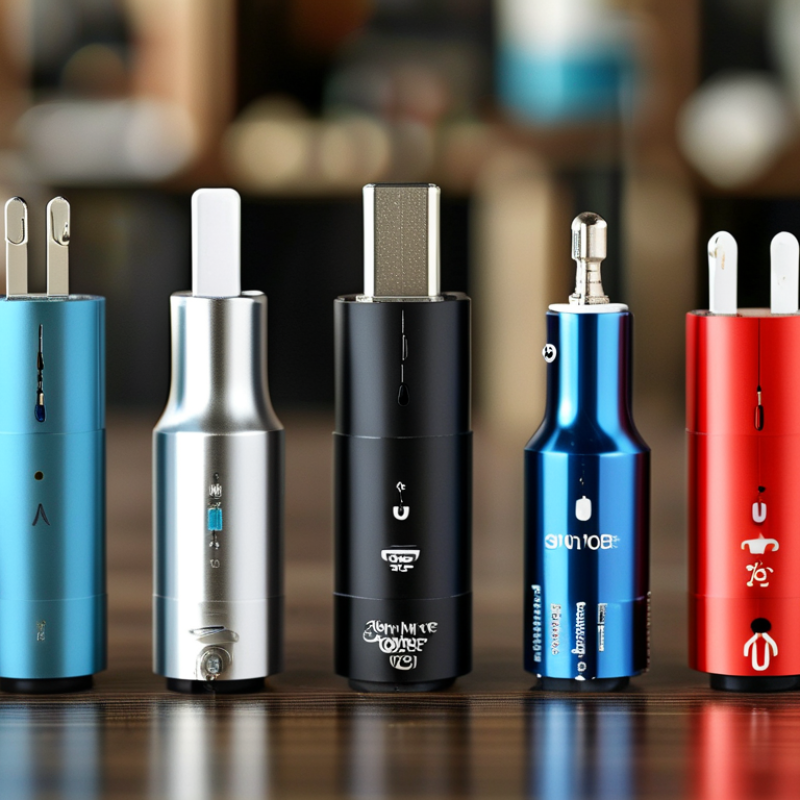
Top 10 Type C Charger Suppliers for Global Buyers?

What Defines a Reliable Type-C Charger Supplier?

A reliable Type-C charger supplier proves performance before discussing price. The USB Implementers Forum’s Power Delivery 3.1 specification supports charging up to 240W, but higher power increases heat and safety demands. Suppliers should provide test records for temperature rise, insulation, overcurrent protection, short-circuit response, and cable compatibility. Independent laboratory reports matter more than attractive product samples. Ask for batch-level traceability, component lists, and firmware control procedures. A certificate alone is not proof.

Regulatory awareness also separates experienced suppliers from traders. The European Commission estimates common-charger rules could prevent about 11,000 tonnes of electronic waste each year and save consumers €250 million annually. A dependable supplier should therefore explain connector standards, labeling duties, recycling requirements, and regional documentation. Check whether production samples match mass-production units. Inspect the plug, strain relief, solder joints, and cable flexibility by hand. Small defects often appear there first. I would not rely on one factory visit or one successful sample. Repeat testing is slower, yet it exposes inconsistent insulation, unstable power negotiation, and weak thermal design. Delivery history, complaint records, corrective-action reports, and honest answers about failed tests reveal more than sales language. Some suppliers still treat Type-C as a connector, not a complete charging system. That is a costly mistake for global buyers.
Key Types of Type-C Chargers for Global Markets

Top 10 Type C Charger Suppliers for Global Buyers
Key Types of Type-C Chargers for Global Markets

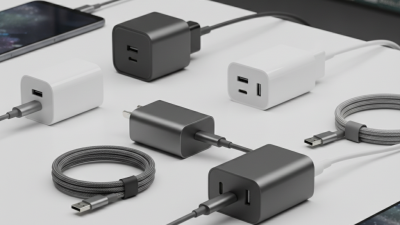
Global buyers usually compare several Type-C charger types before selecting a supplier. Wall chargers remain the standard choice for homes, offices, hotels, and retail shelves. Compact GaN models reduce size and heat, which helps travelers carrying several devices. However, smaller does not always mean better. Buyers should check continuous output, thermal protection, and certification records.

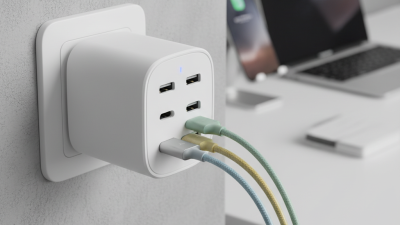
Power Delivery chargers support fast charging for phones, tablets, laptops, and handheld equipment. Models with PPS can adjust voltage more precisely for compatible devices. Multi-port chargers serve families, offices, and charging stations. They may share power when several cables are connected, so suppliers must state each port’s real output. Car chargers offer convenient charging during travel, but buyers should verify socket compatibility and stable performance.

Portable power banks with Type-C input and output suit field workers and frequent travelers. Desktop charging hubs fit workspaces that need organized cable access. Some suppliers also offer rugged chargers with reinforced housings for warehouses or outdoor use. In supplier audits, I examine plug options, cable quality, heat testing, and package markings. A clear specification sheet matters. Yet specifications can still miss daily-use problems, such as loose ports or slow charging with long cables. Sample testing remains necessary before large orders, especially across different regional voltage systems.

Criteria for Evaluating Type-C Charger Suppliers

Global buyers should evaluate Type-C charger suppliers beyond price and catalog size. The International Data Corporation reported approximately 1.23 billion smartphone shipments in 2024, showing the scale of replacement demand. However, shipment volume does not guarantee charger quality. Ask suppliers for output profiles, thermal test results, component traceability, and documented quality controls. Ask for evidence.

Independent laboratory reports should confirm safety, electromagnetic compatibility, and USB Power Delivery performance. USB-IF compliance testing can support technical credibility, but it should not replace factory audits. Inspect soldering lines, burn-in stations, calibration records, and defect-handling procedures. Measure the heat. A supplier that cannot explain protection against overvoltage, overcurrent, and short circuits deserves closer review.

Capacity claims also require practical verification. Request production records, lead-time history, sample approval procedures, and peak-season contingency plans. The International Energy Agency estimates that global electricity demand will keep rising through 2026, making charger efficiency more important for large purchasing programs. A supplier should provide no-load power and efficiency measurements, not vague “energy-saving” language. The European Commission’s common-charger rules also increase the value of accurate Type-C specifications for international distribution. Cheap is not always cheap. Warranty terms, repair procedures, packaging strength, and product-change notifications reveal operational maturity. I would still leave room for doubt: a polished audit can miss inconsistent batches, so independent pre-shipment testing remains necessary.

Top 10 Type C Charger Suppliers for Global Buyers? - Criteria for Evaluating Type-C Charger Suppliers
Rank Anonymous Supplier Profile Primary Manufacturing Region Product Focus Typical Power Range Relevant Certifications and Compliance Quality-Control Capability Typical MOQ Sample Lead Time Mass-Production Lead Time Customisation Capability Buyer Evaluation Score
1 Profile A – High-volume GaN specialist South China USB-C wall chargers, travel adapters, GaN power adapters 20W–240W CE UKCA FCC RoHS REACH DOE Level VI 100% input-output testing; burn-in testing; safety protection verification; AQL sampling 1,000 units per model 5–7 working days 25–35 days Logo, housing colour, packaging, plug type, cable bundle 9.4/10
2 Profile B – Retail-ready charging supplier East China USB-C chargers, multi-port desktop chargers, retail charging kits 18W–140W CE FCC UL-related documentation RoHS WEEE support Component traceability; electrical safety testing; packaging inspection; final random inspection 500–1,000 units per model 7–10 working days 30–40 days Private label, retail packaging, manuals, regional plug configurations 9.2/10
3 Profile C – OEM and ODM power-adapter factory South China USB-C PD chargers, laptop adapters, embedded power supplies 30W–200W CE UKCA FCC RoHS IEC 62368-1 support Design validation testing; thermal testing; over-voltage and short-circuit testing; production line inspection 300–1,000 units per model 10–14 working days 35–45 days Electrical design, mould modification, firmware configuration, full ODM development 9.0/10
4 Profile D – Export-focused universal charger supplier East China International travel chargers, USB-C adapters, interchangeable-plug chargers 20W–100W CE FCC UKCA RoHS CB Scheme support Plug safety inspection; dielectric-strength testing; charging protocol verification; carton drop testing 500 units per model 7–10 working days 25–40 days Plug standards, colour, logo, travel pouch, multilingual packaging 8.8/10
5 Profile E – Multi-port desktop charging specialist South China Desktop USB-C hubs, multi-port PD chargers, office charging stations 65W–300W CE FCC RoHS REACH ErP support Port-by-port load testing; thermal mapping; EMC pre-compliance testing; firmware and protocol checks 300–800 units per model 10–15 working days 35–50 days Port layout, power allocation, casing design, display printing, packaging 8.7/10
6 Profile F – Cost-efficient private-label manufacturer Central China Standard USB-C wall chargers, entry-level PD adapters, charging bundles 20W–65W CE FCC RoHS REACH support Incoming material inspection; functional testing; visual inspection; pre-shipment sampling 1,000–2,000 units per model 5–8 working days 20–30 days Logo printing, colour matching, packaging, cable length and connector selection 8.4/10
7 Profile G – Industrial and commercial charger producer South China High-power USB-C PD chargers, POS chargers, commercial equipment adapters 90W–240W CE FCC RoHS IEC 62368-1 support CB support Reliability testing; thermal cycling; surge testing; protection-function testing; engineering change control 200–500 units per model 14–20 working days 40–55 days Mechanical design, connector selection, electrical tuning, custom safety documentation 8.3/10
8 Profile H – Regional compliance-oriented supplier Southeast Asia USB-C chargers for regional retail and e-commerce distribution 20W–100W CE FCC RoHS REACH SDoC support Final functional testing; product lab coordination; packaging compliance checks; supplier material verification 1,000 units per model 10–15 working days 30–45 days Regional plug types, multilingual labels, packaging artwork and accessory bundling 8.1/10
9 Profile I – Cable-and-charger integrated supplier East China USB-C chargers with USB-C cables, charging sets, replacement adapters 20W–140W CE FCC RoHS REACH USB-IF testing support Cable continuity testing; connector durability testing; charger output testing; packaging and accessory inspection 500–1,000 sets 7–12 working days 25–40 days Cable length, connector shell, braid colour, charger housing, retail bundle configuration 8.0/10
10 Profile J – Small-batch development supplier South China Prototype USB-C chargers, niche adapters, start-up and pilot-order projects 20W–100W CE FCC support RoHS REACH support Engineering sample testing; functional verification; pilot-run inspection; third-party laboratory coordination 100–500 units per model 5–10 working days 30–45 days Small-batch packaging, logo application, enclosure changes and limited electrical customisation 7.8/10
Note: The supplier profiles are anonymised benchmark categories. MOQ, lead time, certifications and testing capabilities are indicative market ranges and should be verified through current certificates, test reports, factory audits, product samples and purchase contracts before order placement.

Top 10 Type-C Charger Suppliers for Global Buyers

Top 10 Type-C Charger Suppliers for Global Buyers

Global buyers need more than low prices when comparing the top 10 Type-C charger suppliers. IDC reported 1.24 billion smartphone shipments worldwide in 2024, creating steady demand for reliable USB-C power products. The Global E-waste Monitor 2024 recorded 62 million tonnes of electronic waste in 2022. Only 22.3% was formally collected and recycled. This makes efficiency, repairability, and responsible packaging important purchasing factors.

A practical supplier review should examine USB-IF testing, output stability, GaN efficiency, thermal protection, and factory quality controls. Buyers should request test reports, sample units, warranty terms, and batch traceability. The European Union’s common-charger rules require USB-C charging for many devices from December 2024, with laptops included from April 2026. Regional compliance is no longer optional. It affects packaging, labeling, and product design. Some suppliers offer excellent samples but inconsistent mass production. That risk is easy to underestimate. Procurement teams should compare at least three production batches, not just one attractive prototype. Supplier capacity, port configuration, plug compatibility, and after-sales response also deserve scoring. Industry data supports strong demand, but market forecasts cannot guarantee every supplier’s performance. A careful audit still matters.

Top 10 Type-C Charger Suppliers for Global Buyers

Supplier-neutral USB-C charging capability benchmark based on USB Power Delivery power classes

This chart compares internationally relevant USB-C charging power classes rather than individual companies or brands. Standard USB-C current charging supports up to 15 W, USB Power Delivery Standard Power Range supports up to 100 W, and USB Power Delivery Extended Power Range supports up to 240 W. Buyers can use these tiers to evaluate supplier product coverage, device compatibility, safety certification, and target-market requirements.

How to Compare Pricing, Certification, and Supply Capacity

Global buyers should compare Type C charger suppliers beyond the lowest unit price. A quote of $2.10 may exclude testing, packaging, molds, freight, and import duties. Request a complete cost sheet. Check the minimum order quantity, payment terms, sample charges, and price validity period. A low quote can still become expensive.

Certification requires careful verification. Ask for current safety test reports, factory quality records, and documents covering electrical safety, electromagnetic compatibility, and restricted materials. Confirm that the reports match the exact charger model, plug type, power rating, and production site. Certificates copied from another product are a warning sign. However, paperwork alone cannot prove consistent quality. Independent sample testing is wiser.

Tips: Compare three samples, not just three quotations. Measure output stability, connector temperature, cable strength, and charging performance. Also review monthly capacity, component availability, backup production lines, and average lead times. A supplier claiming 100,000 units monthly should explain equipment, staffing, and inspection steps. During evaluations, buyers often overlook seasonal delays and component shortages. I would not accept capacity claims without production records or a factory audit. My own comparison method is useful, but imperfect; market conditions can change quickly. Keep a written scorecard, and update it after every sample order.