How to Choose the Best Type C Car Charger for Your Vehicle?
In today's fast-paced world, driving without the right tech can be a significant setback. The increasing reliance on electronic devices has led to a surge in demand for efficient car chargers. Specifically, the Type C Car Charger is emerging as a popular choice for modern vehicles. According to industry reports, over 45% of new cars are now equipped with USB-C ports, illustrating this trend's momentum.
Choosing the right Type C Car Charger involves understanding various features. Fast charging capabilities stand out as a key factor. For instance, chargers with at least 18W output can significantly reduce charging time. Furthermore, safety should never be overlooked. Chargers must have protection against overheating, overcurrent, and short circuits. Poor quality chargers can pose risks to both devices and vehicles.
Consideration of brand reputation is also essential. Trusted brands often have robust testing and quality standards. Moreover, reflecting on user reviews can provide insights into real-world performance. As the market evolves, remaining informed about new developments will ensure a reliable charging experience for all drivers. Investing in a high-quality Type C Car Charger not only supports device longevity but enhances overall travel convenience.
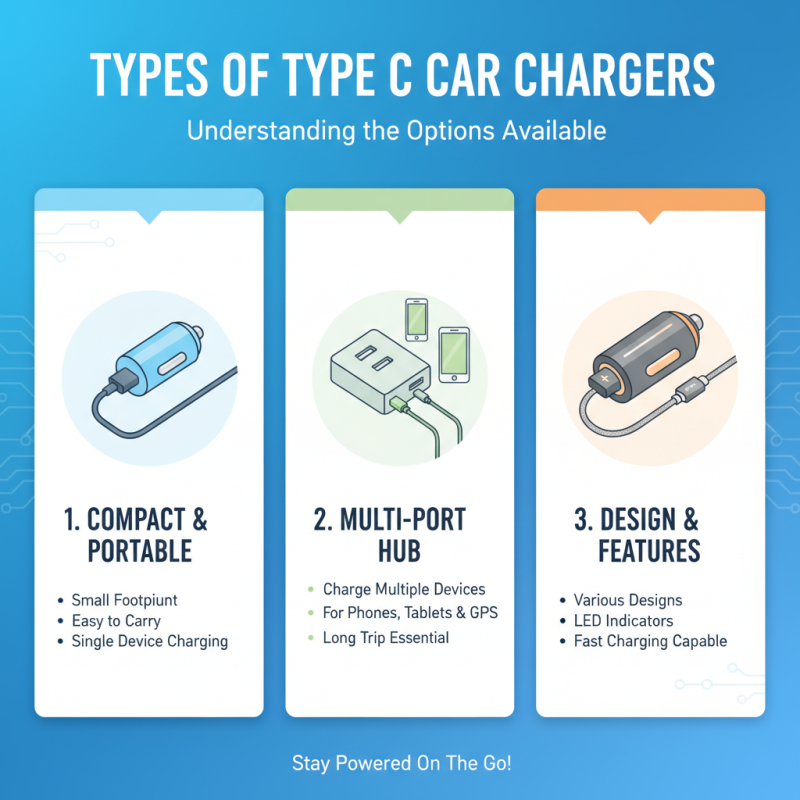
Types of Type C Car Chargers: Understanding the Options Available
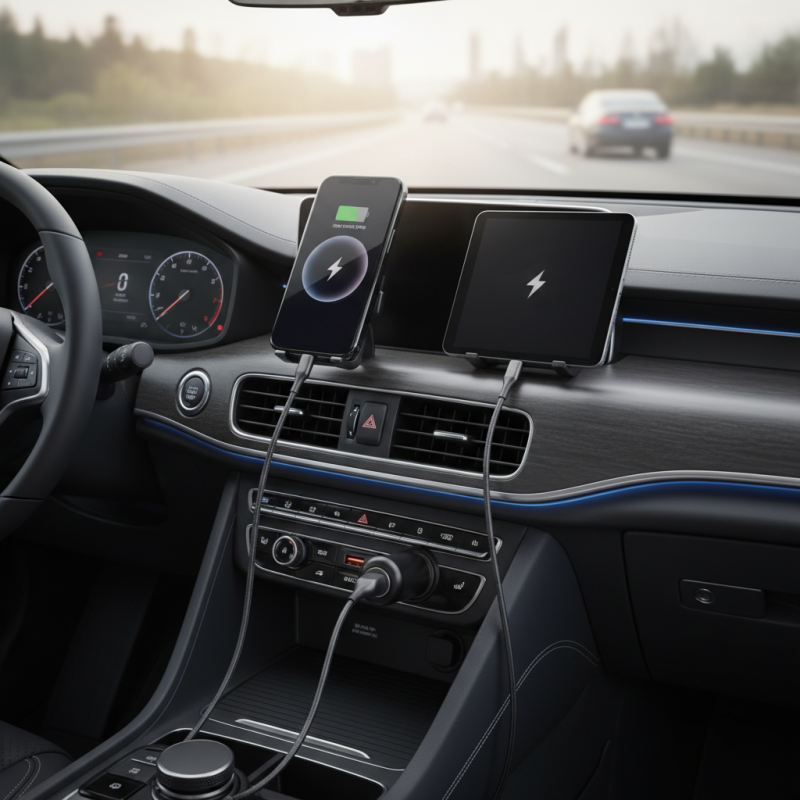
When exploring Type C car chargers, it's essential to understand the various options available. These chargers come in different designs, each catering to distinct needs and preferences. Some are compact, perfect for portability, while others offer multiple ports for charging several devices at once. This flexibility allows drivers to keep phones, tablets, and GPS units powered during long trips.
Another consideration is the charging speed. Many Type C car chargers now support fast charging, which can significantly reduce downtime. However, not all vehicles can handle rapid charging due to older wiring or systems. Checking your vehicle’s compatibility is crucial. Invest in a charger that matches your vehicle’s capabilities to avoid potential damage or inefficiencies.
Quality can vary. While some chargers may look appealing, their performance might not live up to expectations. Reading reviews and understanding user experiences can help. Some chargers may overheat or fail after a few uses. Being aware of these pitfalls is essential in making the right choice.
Key Features to Consider When Selecting a Type C Car Charger
When selecting a Type C car charger, it's important to focus on several key features. One primary aspect is charging speed. Look for chargers that support Power Delivery (PD) to ensure faster charging capabilities. With the right charger, your devices can power up significantly quicker than with standard chargers.
Another factor is the number of ports. A dual-port model allows charging multiple devices simultaneously, which is helpful for families or road trips. Consider the cable length as well. A longer cable can provide more flexibility, especially in larger vehicles.
Tips: Check user reviews to gather insights on durability. A robust build often means the charger can withstand daily wear. Avoid overly cheap options; investing a bit more usually pays off in quality. Finally, think about the compatibility with your devices. Not all chargers work the same way, so do your homework before making a decision.
Compatibility with Vehicle Models: Matching Chargers to Your Car
When selecting a Type C car charger, compatibility with your vehicle model is crucial. Many car manufacturers have specific power requirements. A 2021 report by the International Automotive Engineering Society highlighted that improper power delivery could cause devices to charge inefficiently or even damage the battery. Vehicles with advanced infotainment systems may require chargers that support Power Delivery (PD) protocols for optimal performance.
An important tip for choosing a charger is to check your vehicle’s manual. It often lists compatible charging specifications. Consider the charging output as well. Most modern devices benefit from at least 18W for fast charging. It's helpful to note that some cars have more than one Type C port. Matching the charger’s output with each port's capacity ensures devices charge without issue.
Pay attention to user reviews. Sometimes, the specifications look good on paper, but real-world performance may vary. A charger that works well for one vehicle may not for another. Make sure to cross-reference your vehicle's compatibility with multiple sources. This due diligence can prevent future frustrations and power issues.
How to Choose the Best Type C Car Charger for Your Vehicle?
Compatibility with Vehicle Models: Matching Chargers to Your Car
| Vehicle Model |
Charger Type |
Power Output |
Number of Ports |
Additional Features |
| Toyota Camry |
Type C Fast Charger |
30W |
2 |
Smart Charging |
| Honda Accord |
Type C Multi-Port Charger |
45W |
3 |
LED Indicator |
| Ford F-150 |
Compact Type C Charger |
24W |
1 |
Overcharge Protection |
| Chevrolet Malibu |
High Speed Type C Charger |
60W |
2 |
Quick Charge 3.0 |
| Nissan Altima |
Wireless Type C Charger |
20W |
1 |
Temperature Control |
Charging Speed: Evaluating Power Output and Performance Metrics
When selecting a Type C car charger, charging speed is a critical factor. The power output significantly influences how quickly your devices will charge. A charger with a higher wattage rating typically delivers faster charging speeds. However, this doesn't always guarantee the best performance. Compatibility with your device also matters. Some devices may not support higher wattage, leading to suboptimal charging, even with a powerful charger.
It's essential to evaluate performance metrics like amperage and voltage. A charger that consistently delivers the correct voltage ensures safe and efficient charging. Look for models with smart charging capabilities, which can adjust output based on the connected device. But beware: not all chargers claim to be fast, but only a few truly deliver. Real-world tests can often reveal discrepancies in advertised performance versus actual results. Prioritize user reviews and expert opinions to identify reliable options.
Safety Standards in Type C Car Chargers: Ensuring Reliable Use
When selecting a Type C car charger, safety standards are crucial. Reliable chargers comply with guidelines set by recognized organizations. This compliance ensures they can handle various devices without posing risks. Look for chargers that have passed tests for overheating, overcharging, and short-circuit protection. This minimizes the risk of damage to your vehicle and devices.
Always check for certifications like UL or FCC. These labels indicate that the charger meets industry safety requirements. But not all products display these certifications clearly. Some less experienced manufacturers may cut corners to save costs.
Tips: Prioritize chargers with built-in safety mechanisms. Look for features like temperature control and surge protection. Tests show that these features can significantly reduce risks. Consider doing research and reading reviews before purchasing. Protect your investment in both your vehicle and your technology. Make informed choices for peace of mind while driving.