10 Essential Tips for Choosing the Right USB Charging Cable
When selecting a USB charging cable, many overlook its importance. A quality cable can enhance device lifespan and performance. The global market for USB cables is projected to grow significantly, with an expected compound annual growth rate (CAGR) of 5.5% from 2022 to 2030, according to industry reports. Such growth highlights the increasing reliance on these essential accessories in daily life.
Understanding the various types of USB charging cables is crucial. Many consumers often choose cables based on price alone. However, not all cables meet safety standards. Reports indicate that substandard cables can pose safety risks, including device overheating. A poorly chosen cable might also slow down charging time, resulting in frustration.
Investing time in selecting the right USB charging cable could save users from costly mistakes. It's common for people to buy cables that are either too short or incompatible with their devices. Such decisions reflect a lack of awareness, which can lead to dissatisfaction. Hence, this guide aims to provide essential tips to navigate the myriad of options available in the market today.
Understanding USB Cable Types and Their Compatibility
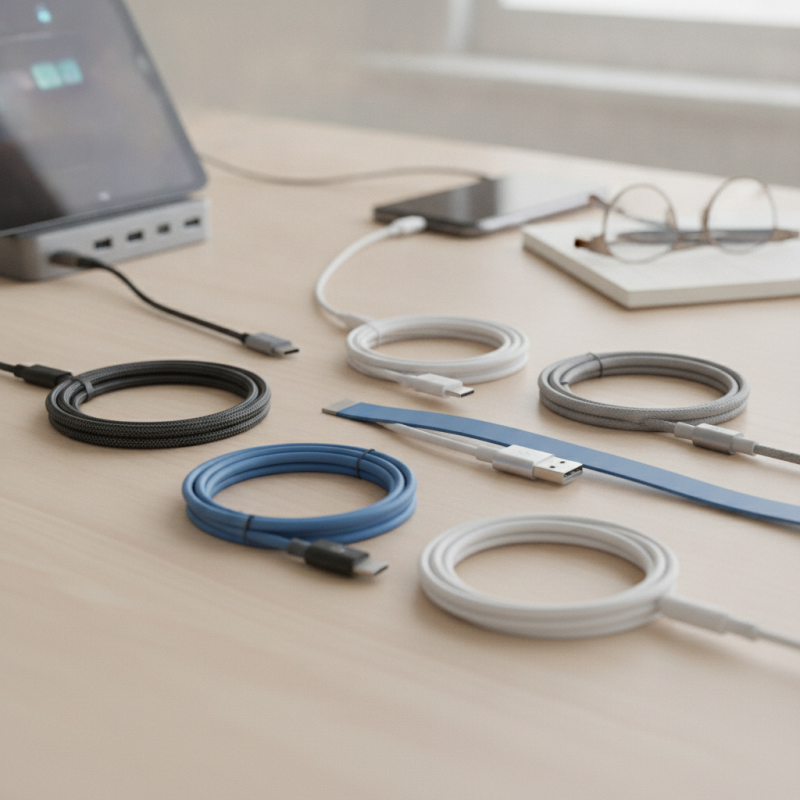
When selecting a USB charging cable, understanding USB cable types and their compatibility is crucial. Various USB standards exist, such as USB-A, USB-B, USB-C, and Micro USB. Data from the International Electrotechnical Commission shows that USB Type-C is gaining popularity due to its versatility and faster charging capabilities. This cable supports higher power levels and data transfer rates, making it suitable for modern devices.
Tip: Always check your device specifications. Not all cables will deliver the same performance. For instance, using a USB-C cable with lower specifications may result in slower charging. Additionally, ensure the cable fits securely into your device’s port to avoid connection issues.
Cables vary significantly in quality. A report from TechRadar reveals that low-cost cables can often lead to safety hazards or reduced performance. Users sometimes overlook the importance of data speed ratings. A cable that supports USB 3.0 will perform much better than those stuck with USB 2.0.
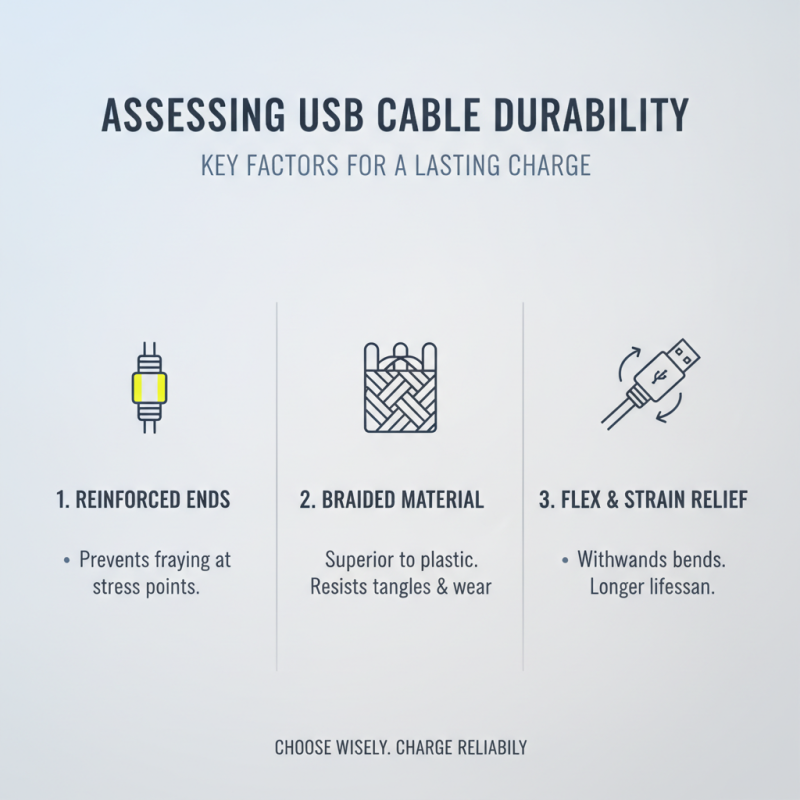
Tip: Invest in cables with reinforced connectors. These tend to last longer under repeated use. While it may be tempting to choose the cheapest option, the durability and performance of a higher-quality cable can save you time and stress in the long run. Balancing cost with quality is often a reflection of how much you value your devices.
Key Factors to Consider When Selecting a USB Charging Cable
Choosing the right USB charging cable is crucial for optimal device performance. When selecting a cable, consider the material quality. Nylon braided cables often offer better durability than plain plastic ones. A poor-quality cable may fray or break easily, leading to frequent replacements. The connection points also matter. Loose connections can lead to intermittent charging, which can be frustrating.
Another key factor is the cable's length. A longer cable provides flexibility but may lead to slower charging speeds. Check the specifications carefully. Not all cables support fast charging. Some might look similar but function differently. Misleading packaging can make it hard to choose correctly. Compatibility with your devices should be at the forefront of your decision-making. Using the wrong cable risks damaging your device or failing to charge effectively.
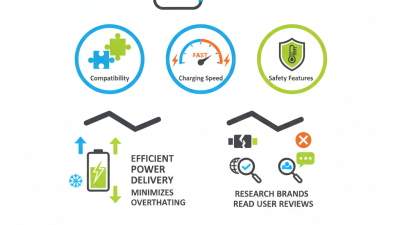
It’s also essential to check the charging speed. A cable might support high power output, but it won't make your device charge faster if the adapter limits it. Reflect on your daily charging habits. Do you often charge on the go or at a desk? Knowing your environment can guide you in choosing the ideal length and type of cable. Remember, even small details can impact your overall charging experience.
Importance of Cable Length for Different Use Cases
When it comes to choosing a USB charging cable, the length is crucial. A report from the Consumer Electronics Association states that approximately 75% of users experience connectivity issues due to inappropriate cable lengths. For short-range use, such as charging your phone on a desk, a 3-foot cable is typically sufficient. It allows for easy handling without excess clutter.
For users who need to charge devices while using them, longer cables become essential. A 6-foot cable offers flexibility for couch or bed use. According to a market research firm, 40% of users prefer longer cables for this reason. However, longer cables may lead to slower charging speeds. This happens due to increased resistance in longer wires, affecting efficiency.
Choosing the right length requires understanding your habits. If you frequently move around, consider a cable that offers more length. But remember that too long can be problematic, causing tangling and wear. Reflect on your needs carefully; the right length can make a significant impact on your daily device usage.
Recognizing Safety Standards and Certifications for USB Cables
When selecting a USB charging cable, recognizing safety standards and certifications is vital. Many cables lack the necessary approvals, which can jeopardize your devices. Look for certifications like USB-IF, which ensures the cable meets specific safety and performance criteria. This may sound simple, yet countless users overlook it, risking their devices.
Check for markings on the cable. A certified cable will often display a logo or number indicating compliance. If you can't find such identifiers, consider it a red flag. Quality cables may be a bit pricier, but they offer better reliability and longevity. It's easy to underestimate the impact of a poor-quality cable, but doing so can lead to chargers overheating or devices malfunctioning.
Additionally, users often assume all cables perform equally. This isn’t true. Low-quality cables can cause slower charging and data transfer, which is frustrating. Consider how often you've scrambled for a faster alternative. Investing in a good cable will save time and avoid potential headaches later on. Recognizing these standards ensures a safer and more efficient charging experience.
10 Essential Tips for Choosing the Right USB Charging Cable - Recognizing Safety Standards and Certifications for USB Cables
| Tip |
Description |
Safety Standards |
Certification Type |
| 1. Check Cable Length |
Choose a length that fits your needs without excess bulk. |
UL, CE |
UL Listed |
| 2. Look for Quality Materials |
Opt for cables made from durable materials that resist wear and tear. |
ISO 9001 |
RoHS |
| 3. Compatibility |
Ensure the cable is compatible with your device's charging requirements. |
FCC |
CCC (China Compulsory Certificate) |
| 4. Fast Charging Capability |
Select cables that support fast charging standards for quicker power-up. |
IEC 62133 |
CE Marking |
| 5. Avoid Non-Certified Products |
Choose cables that are certified to avoid risks of overheating or damage. |
RoHS |
MFi (Made for iPhone/iPad) |
| 6. Reinforced Ends |
Cables with reinforced connectors last longer and resist fraying. |
TUV |
UL Listed |
| 7. Trusted Retailers |
Purchase cables from reputable retailers to ensure product integrity. |
CE |
ISO 14001 |
| 8. Flexibility for Storage |
Consider how easily the cable can be stored or transported. |
FCC |
ETL Listed |
| 9. Warranty and Return Policy |
Check for warranties or return policies that protect your purchase. |
ISO 9001 |
MFi (Made for iPhone/iPad) |
| 10. Read Reviews |
Consult user reviews for insights on performance and longevity. |
RoHS |
CE Marking |