


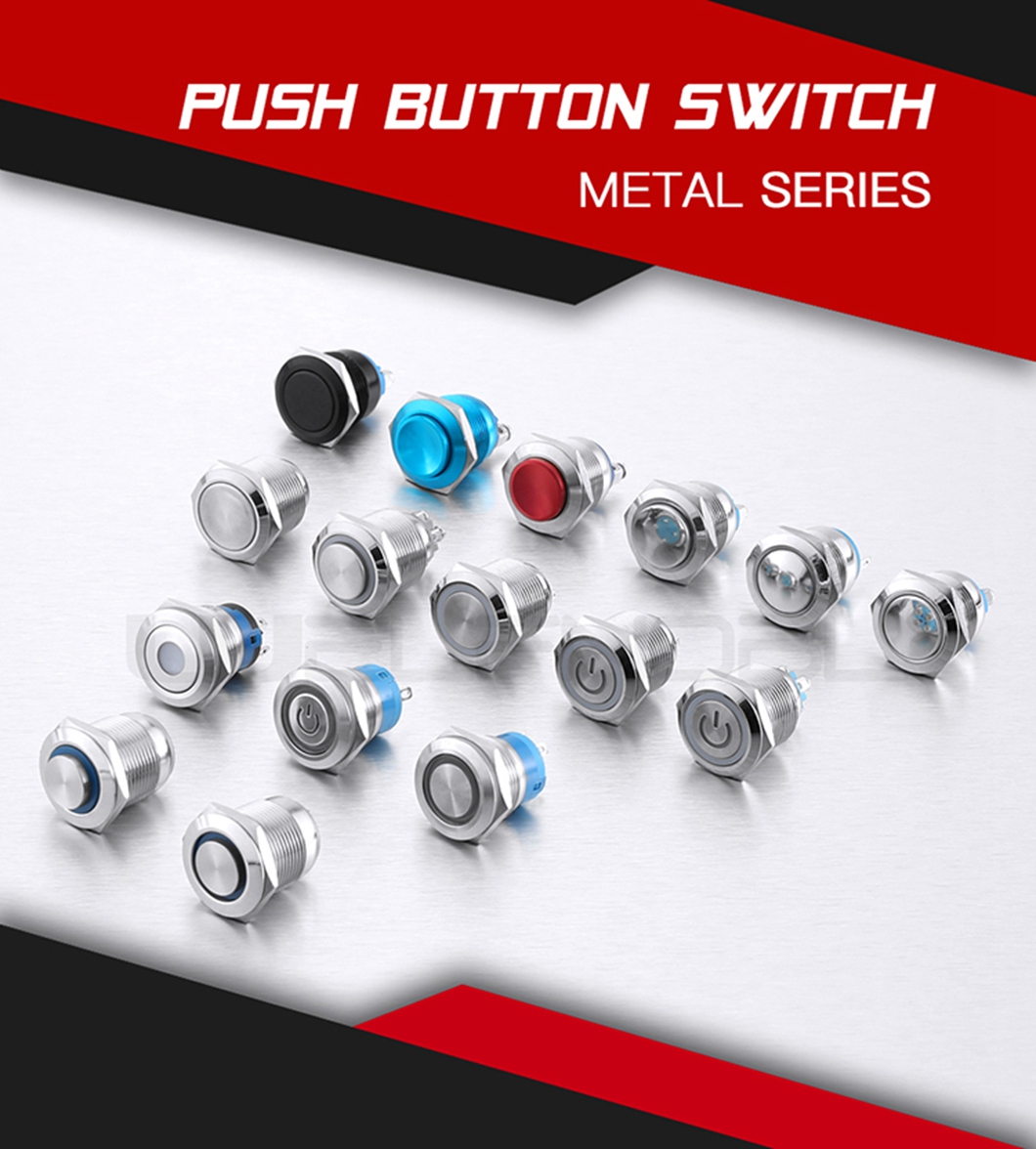
Impact of Rising Raw Material Costs on Metal Push Button Switches
2025 Price Trends & Drivers of Key Raw Materials
- Copper – The Sharpest Price Surge
Copper prices hit record highs in 2025. Shanghai copper futures closed above RMB 100,000/ton; LME three-month copper rose over 30% for the year, reaching a record $12,960/ton. Shanghai copper gained 32.97% in 2025.
Drivers:
- Supply constraints: Declining ore grades (from 0.68% in 2001 to 0.45% today), long lead times for new mines (>10 years), frequent production disruptions (Chile blackout, Indonesia mudslide). TC/RCs fell to historic zero levels.
- Structural demand growth: AI data centers and global energy infrastructure.
- Macro/financial: Fed rate cuts weakened the dollar; US tariffs tightened ex-US refined copper inventories.
- Stainless Steel – Divergent Trends for 304/316L
Stainless steel prices rose steadily in 2025. 304 cold-rolled coil increased by over RMB 700/ton from June lows. 316L (molybdenum-containing) saw the biggest cost pressure – Outokumpu raised its 316L alloy surcharge by EUR 112/ton.
Drivers: Rising nickel and molybdenum prices; China’s “anti-internal competition” policy; high-carbon ferrochrome prices due to overseas plant closures and tight domestic supply.
⚠️ Special note: 200-series stainless steel (containing copper) is directly impacted by copper price hikes – each ton of 200-series steel now incurs significantly higher copper element costs, which inevitably feeds into final prices.
- Silver – Outpacing Gold
Silver prices soared nearly 120% in 2025. London spot silver rose from ~$30.1/oz at the start of the year to **$64.74/oz** on Dec 16; a single-month gain of 25% in October, breaking $50/oz.
Drivers: Global silver inventories at 10-year lows; fifth consecutive year of supply deficit – 95 million oz deficit in 2025, inventory covers only 1.2 months of consumption; industrial demand boom from PV, AI servers, and EVs; three Fed rate cuts totaling 75 bps, lowering real interest rates.
- Electronic Components – Multi‑round, Cross‑regional Price Hikes
From Q4 2025, price hikes spread across electronic components – medium/low voltage MOSFETs, SoCs with embedded storage, LED drivers. Passive components (MLCCs, resistors, inductors) saw increases of 5% to 30% in full‑category, multi‑round cycles. High‑voltage IGBT lead times extended to 16 weeks, with price increases of 15%–20%.
Drivers: Stronger-than-expected downstream restocking; upstream metal price pass-through; broad recovery in industrial and automotive electronics; channel inventory days dropped from 45 to 20, creating supply‑demand imbalance.
---
- Specific Impacts on Metal Push Button Switches
- Cost Side: Across‑the‑Board Production Cost Increase
- Metal housing costs rise: Copper price hikes directly raise brass housing costs; stainless steel inflation pressures 304/316L housings.
- Contact material costs surge: Silver price doubling severely impacts silver alloy contacts.
- Electronic component costs increase 5%–30%: LED indicators, PCBs, etc.
- Comprehensive pass‑through evident: The “low‑voltage switches & power supplies” sub‑index of the Hardware & electrical Machinery Index rose by 5.01 points. Major players (Chint, ABB, Delixi) issued price adjustment letters citing raw material pressure, with some products rising 3%–15%. The Electrical & Electronic Price Index rose 1.33%, driven by copper and semiconductors.
- Supply Side: Increased Risk and Uncertainty
- Supply chain vulnerability worsens: Copper concentrate tightness and frequent mine disruptions create ongoing supply risks.
- Geopolitical risk transmission: Russia‑Ukraine conflict, US tariff policies continue to disrupt global supply chains and raise import costs for metals.
- Inventory management complexity: Companies must monitor price changes more closely and optimise inventory levels to avoid write‑downs or shortages.
- Product & Technology Side: Cost‑Driven Upgrades
- Contact material substitution: Skyrocketing silver prices accelerate “silver‑reduction” technologies – similar to the PV industry’s path – using alternative materials and process improvements to reduce silver paste dependency.
- Design optimisation: Low‑voltage equipment manufacturers reduce raw material consumption through improved materials, processes, and product design.
- Accelerated technology upgrade