

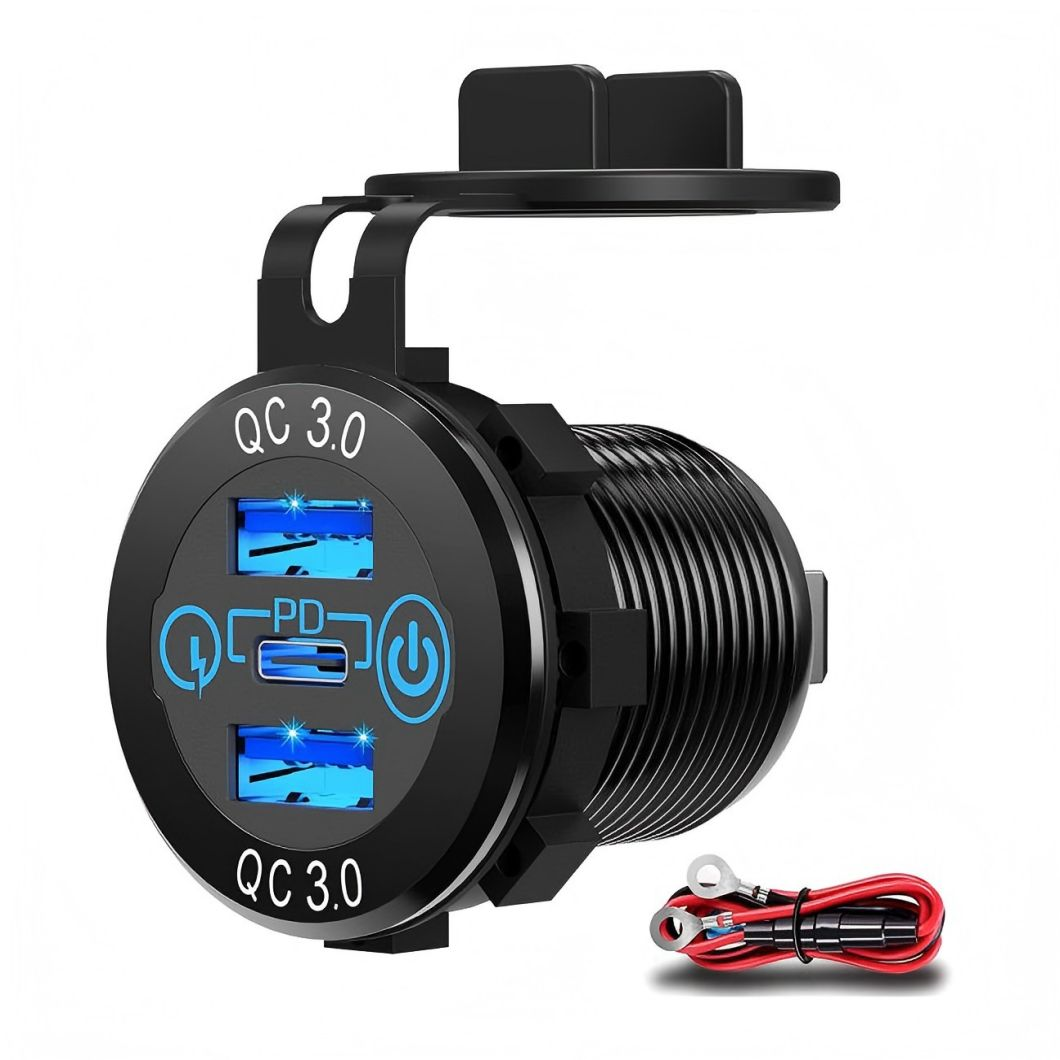
Have you chosen the right car charger?
Selecting the wrong output current is very dangerous
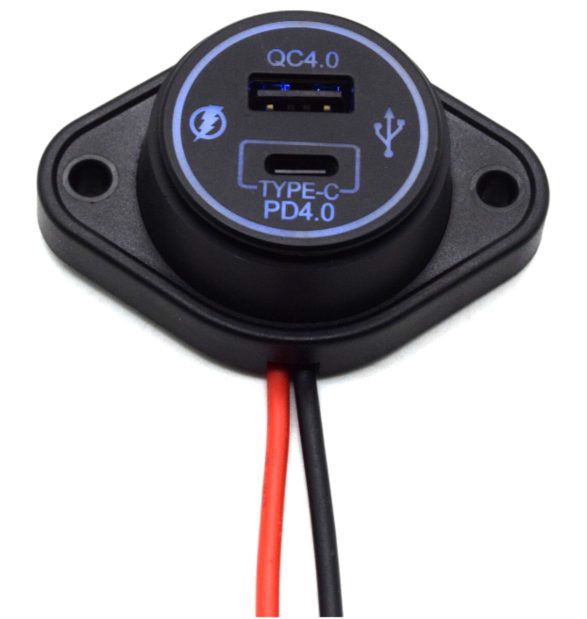
Most car chargers currently on the market come with two or more USB ports to accommodate multiple electronic devices. However, these ports are not entirely identical—some output 5V/2.1A, while others provide 5V/0.5A.
According to the current output flow specifications, the 5V/2.1A interface can quickly charge a mobile phone with a maximum rated input power of 5V/1A, while also being capable of charging devices like iPads.
However, when the 5V/0.5A interface is used to charge devices with higher rated input power such as iPads, it results in a situation where a small horse pulls a heavy cart.
As the saying goes, crossing paths is like crossing mountains. For car owners who do not understand electronic devices, they did not consider these factors when choosing an in car charger, resulting in slow charging time, inability to charge, or equipment overheating or damage, which can cause fires in severe cases.
Another situation is that some car owners, upon seeing that their cars are equipped with USB ports, no longer purchase car chargers and instead directly charge electronic devices such as phones and iPads, which is a wrong habit. Because the rated current output directly affects the charging of the equipment, the USB interface equipped on the vehicle has a rated power output of only 5A/0.5A. If it cannot meet the charging requirements of the equipment, it will also damage the equipment.
Unqualified chargers have hidden dangers
After seeing market demand, manufacturers have launched various types of car chargers, but the quality varies greatly.
The Electronic Product Inspection Research Institute of a certain provincial quality inspection institute has tested 10 samples, and 8 of them have certain safety hazards, mainly concentrated in the lack of protective devices, non flame retardant shells, unqualified overvoltage strength, and excessive temperature under normal temperature rise.
The results are very surprising.
According to the testing engineer, the stronger the carrying capacity of the car charger, the faster it can charge electronic devices such as mobile phones, and provide power for multiple different external devices. Some manufacturers, in order to attract car owners, may falsely label the "load capacity" on the car charger. For example, a car charger with a nominal output of 5V/2.1A should be able to provide charging services for two phones, but in reality, it cannot even drive one phone, resulting in the problem of capacity false labeling. This situation can easily cause the charger to explode due to excessive load.
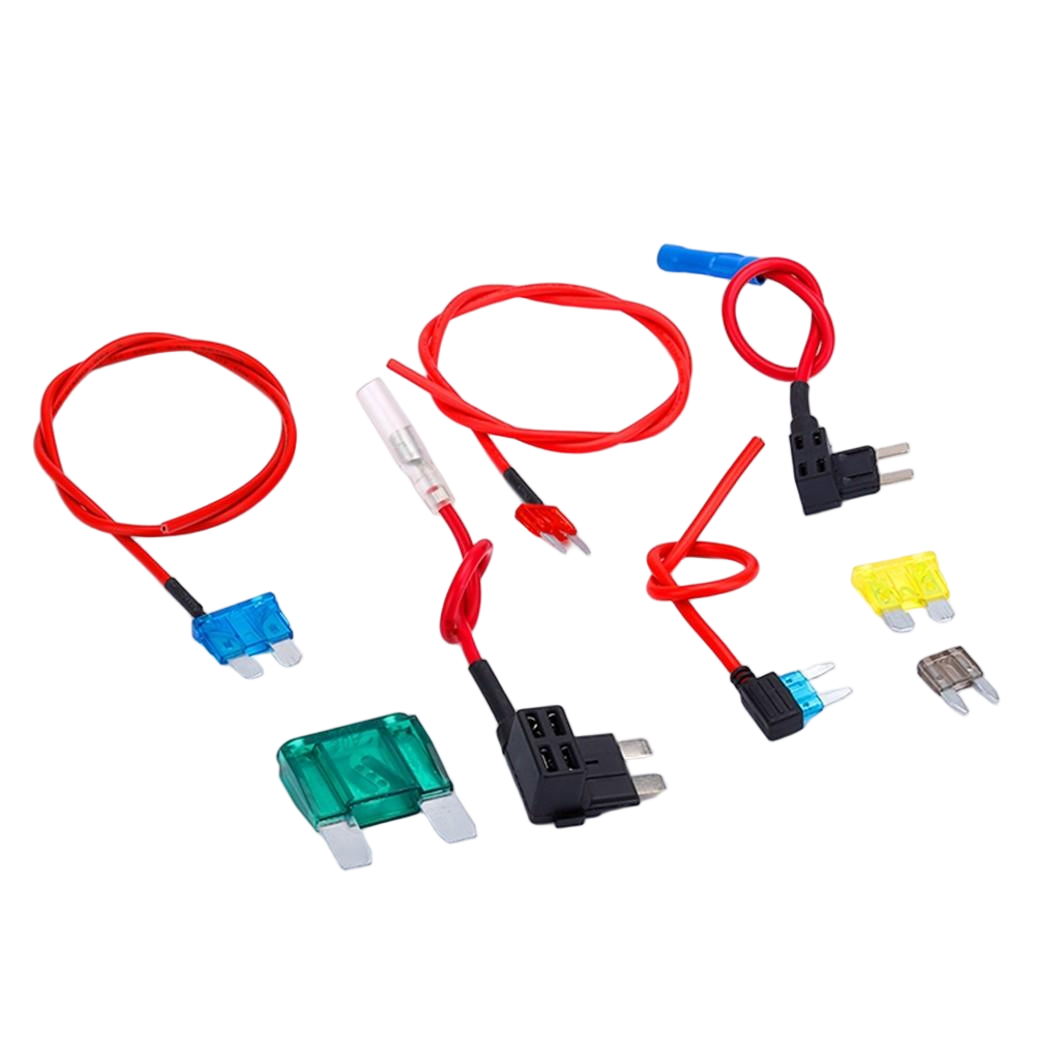
In addition, industry standards require that car chargers must be equipped with effective protective devices to ensure that the power supply line is quickly cut off in the event of internal line faults or abnormal voltage input leading to short circuits, in order to avoid greater losses. But some car chargers do not have a fuse design, which poses a huge safety risk.
Regarding the two important indicators mentioned above, car owners did not study them seriously and only pursued low prices, high current, multiple interfaces, and charging speed. The results can be imagined.
There are specific selection criteria
At present, the prices of car chargers sold in the market range from tens to hundreds of yuan. However, due to the lack of mandatory national or industry standards, the quality of these car chargers is worrying. Therefore, car owners should pay attention to three aspects when choosing:
One is to choose products with an output current of 1A or higher. The input voltage of car chargers is generally 12V-24V, the output voltage is 5V, and the output current is between 1A and 4A. However, some "three no" or "counterfeit" products commonly exhibit false charging current labeling.
The second is to choose products with overload protection function. The reason why car chargers need overload protection is that when the output current is too high and exceeds its normal output value, the lifespan of the charger components will be shortened, or the temperature will be too high, causing damage or even combustion. Therefore, car chargers should have overload protection function, and the general requirement for current overload protection is not to exceed 5A.
The third is to choose legitimate and licensed products. Be sure to buy products from legitimate manufacturers that have passed safety certification. Do not purchase or use "three no" products, otherwise there will be no way to complain about quality problems. Especially, one should not be tempted to buy products that cost less than 20 yuan at a low price. At present, the prices of mainstream car chargers in China are mostly between 20 and 100 yuan. When purchasing, remember to buy licensed products with Chinese markings.
Precautions for using car chargers
Do not insert the car charger before starting the car to avoid voltage damage to the car charger during startup.
Never use strong chemicals, cleaning agents, or strong detergents to clean car chargers, as they can seriously damage their functionality.
Do not casually throw, knock or vibrate the car charger; When the temperature inside the car exceeds 45 ℃, do not use the car charger, otherwise it will seriously damage the internal circuit board of the car charger.
Do not let the car charger get wet or expose it to humid air for a long time, otherwise it will cause varying degrees of corrosion or oxidation to its internal electronic components.
After the vehicle is turned off, the car charger should be unplugged and placed. Although 80% of vehicles have their cigarette lighters powered off after removing the key, there are also some cars whose cigarette lighters are continuously powered on.