


What material is the fuse made of?
Fuses, also known as fuses, are defined as "fuse links" in international standards. They are electrical components installed in circuits to ensuresafe operation of the circuit.
Electronic products cover a wide range, and among these products that require electricity, they all need to be equipped with small components that shoulder the responsibility of safety, such as fuses. Not only do 3C products have fuses, but fuses must also be installed in ordinary cars or electric vehicles.
Nowadays, with products becoming smaller and more integrated, the shape and size of fuses are also very different from traditional fuses. For example, mobile phone fuses must conform to the trend of fast charging, withstand instantaneous large currents, and achieve their protective function. The requirements for fuses are becoming increasingly high.
The glass tube fuses we usually see are not made of a single material, they are alloys made of lead, antimony, and tin. These metals are added to achieve a low melting point, with copper caps at both ends for better conductivity. The surface of the copper cap is nickel plated
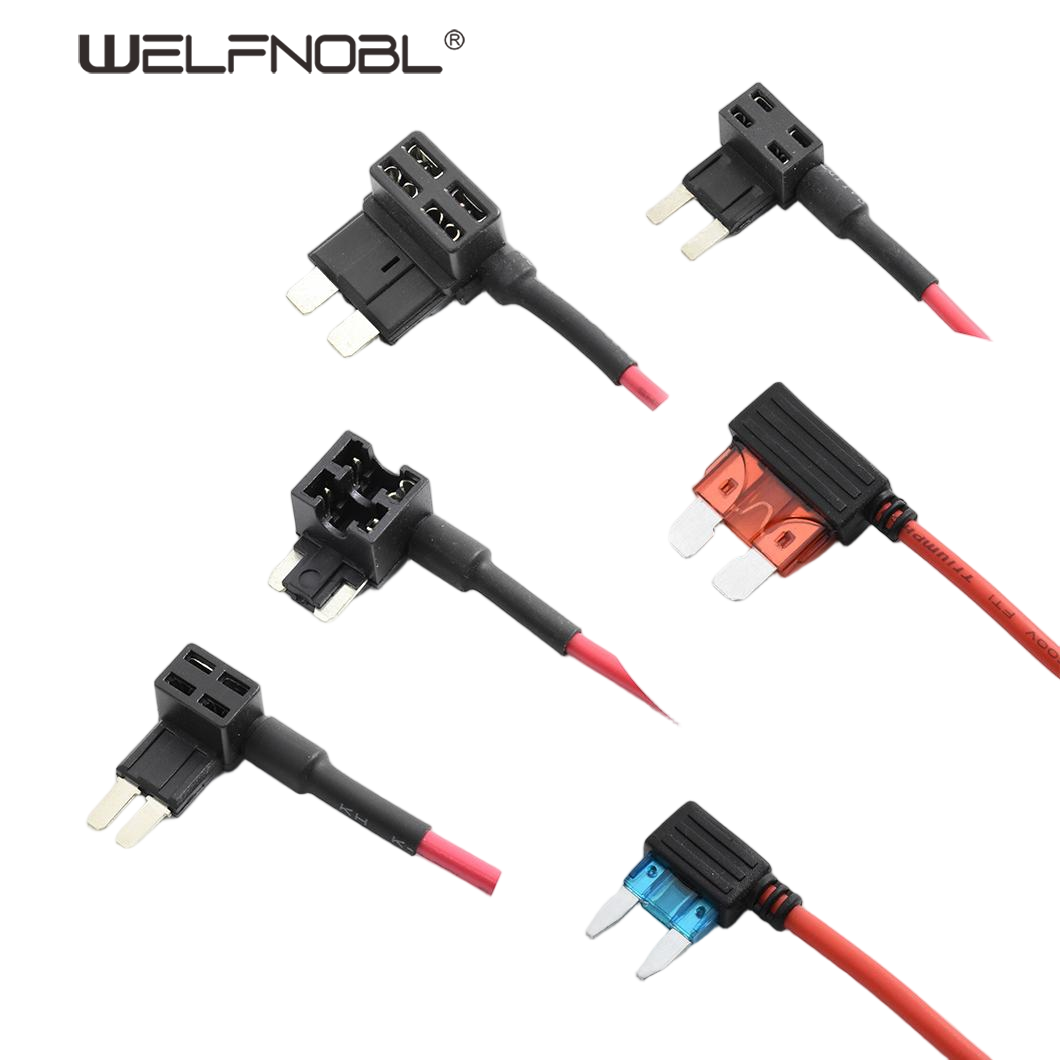
The shape of the fuse has the earliest use of filamentous fuses, which are directly fixed at both ends with screws and used on old-fashioned electric switches
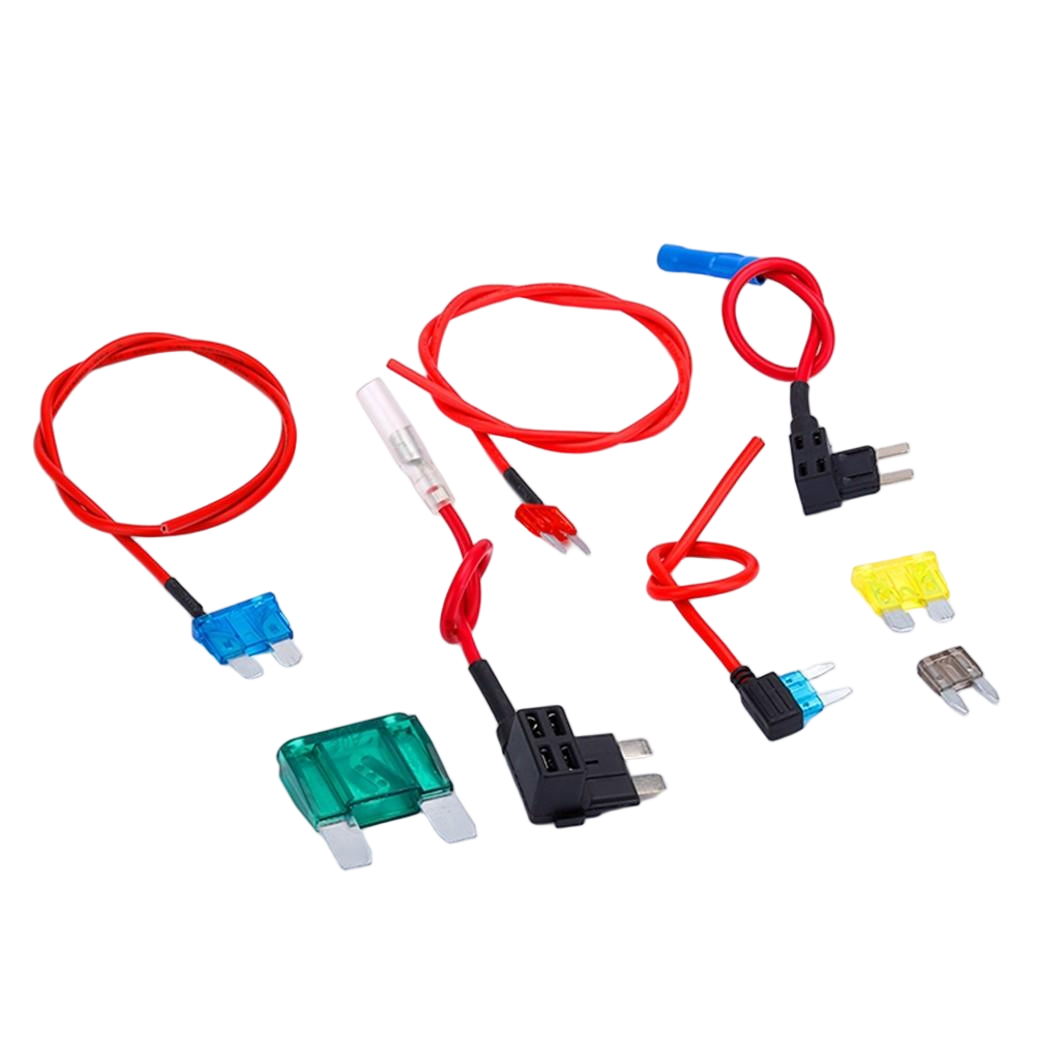
A sheet fuse is composed of a plastic sheet and two metal sheets, commonly used in cars, while a glass tube is commonly used in electronic products
Cylindrical fuses directly solder the pins at both ends to the circuit board, while square fuses have the characteristics of insulation and space saving, and are commonly used in electronic products such as computers.
The function of a fuse is to continuously increase the current when a circuit malfunctions or is abnormal, and the increased current may damage components, burn out the circuit, or even cause a fire.
If a fuse is installed in the circuit, it will melt the fuse and cut off the current when the current rises abnormally to a certain height, thus protecting the electrical appliance.
Fuses were born in the 1880s, when Edison invented fuses that were equivalent to safety valves in circuits and applied for patents. At that time, fuses were invented to protect incandescent lamps, as incandescent lamps were still very expensive at that time.

With the development of society and the increasing number of electrical appliances, the fuse industry has also experienced rapid growth. In China, the fuse industry started relatively late, and it was not until the localization of televisions in the 1970s that the development of fuses in China was promoted.
The working principle of a fuse is that when current passes through a conductor, the conductor will generate heat due to the presence of a certain resistance. Once the material and shape of the fuse are determined, its resistance will also be determined. When current flows through it, it will generate heat, and its heat generation will increase over time. The size of the current and resistance determine the rate of heat generation, and the structure and installation of the fuse determine the rate of heat consumption. If the rate of heat generation is less than the rate of heat dissipation, the fuse will not melt.
If the rate of heat generation is equal to the rate of heat dissipation, it will not melt for a considerable period of time. If the rate of heat generation is greater than the rate of heat dissipation, the amount of heat generated will increase, and the increase in heat will cause the temperature to rise. When the temperature rises above the melting point of the fuse, the fuse will melt.
The manufacturing of common glass tube fuses involves first pulling silica material into a transparent glass tube with a diameter of 5 millimeters at high temperature, and then cutting it into a length of 30 millimeters. The two ends of the glass tube should be smoothed with high temperature treatment to prevent the sharp edges of the glass tube from scratching the fuse when threading.
Place an alloy fuse inside the glass tube, and print the top and bottom covers with specifications by welding them together with the fuse at high frequency.
Finally, the mechanical automatic detection fuse pops up the fuse that fails the detection, and the qualified fuse is packaged.
Some people may wonder why common fuses need to be installed inside glass tubes. Firstly, glass tubes are insulated and not easy to ignite, ensuring that the fuse is the only conductive connection intermediary at both ends. The cheap price of glass tubes is also the reason for using them. In addition, glass tubes can see whether the internal fuse is blown, making it easier to judge the quality of the fuse. Also, the glass tube is not vacuum.
With the development of technology, more types of fuses have emerged, such as recoverable fuses. These fuses automatically deform when the temperature exceeds a certain safe temperature, causing power failure. After the temperature is restored, they can automatically power on and work normally without manual intervention.
There is also a type of temperature fuse that automatically melts when the temperature of an electrical appliance reaches a certain safe temperature, cutting off the power and preventing fires, such as commonly used electric pots, coffee machines, etc. However, temperature fuses do not have the current protection function of ordinary fuses.
The structure of ordinary fuses is simple and the manufacturing process is relatively easy, with dozens of fuses produced per minute. Currently, electronic products have increasingly high requirements for fuses. In order to meet these requirements, fuses must be "thin, light, and short". In the fuse market with relatively high power, the requirements will be even higher. Small fuses play an important role in various electronic appliances.